Languages die regularly. Of the roughly 7,000 languages spoken today, linguists estimate that half will be gone by 2100. The pattern is familiar: a dominant language moves in, children grow up bilingual, then children of those children stop learning the old language at home, and within two or three generations it exists only in the memories of the oldest people in the community. When they die, it dies.
Reversing this process is almost impossible. There are dozens of language revival efforts underway around the world at any given time. Welsh is doing relatively well. Hawaiian has recovered somewhat. Maori in New Zealand has stabilized. But none of these came back from complete death as a spoken tongue. They survived in communities of speakers who simply needed more support and political recognition.
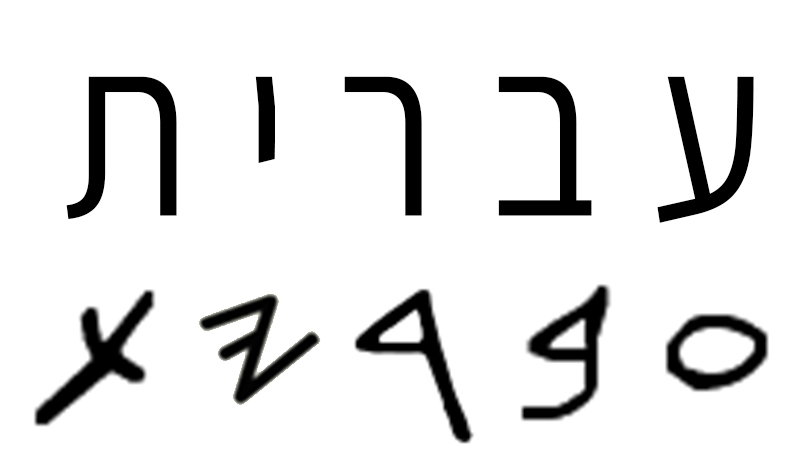
Hebrew is different. By sometime in the second to fourth century CE, Hebrew had ceased to be anyone’s mother tongue. Jews continued to read and write it for religious and scholarly purposes, but nobody spoke it at home, or to their children, or at the market. It had been functionally dead as a spoken language for roughly fifteen centuries.
Then Eliezer Ben-Yehuda decided to bring it back.
Ben-Yehuda was a Lithuanian Jewish intellectual who emigrated to Palestine in 1881 with a specific mission. He believed that the Jewish people needed a common spoken language and that Hebrew, shared across all Jewish communities regardless of their regional vernaculars (Yiddish, Ladino, Judeo-Arabic, and dozens of others), was the right choice. He and his wife raised their son Ben-Zion as the first native Hebrew speaker in modern times, deliberately. They spoke only Hebrew in the household, even when Hebrew words for everyday modern objects did not yet exist.
That last problem was significant. Ancient and biblical Hebrew had no words for newspaper, dictionary, towel, or ice cream. Ben-Yehuda and others invented thousands of them, sometimes drawing on ancient roots and applying them to new concepts, sometimes borrowing from Arabic (a close Semitic relative), sometimes inventing from scratch. The Hebrew word for newspaper, iton, comes from a root meaning “time.” The word for towel, magevet, comes from a root meaning “to wipe.”
By the time the State of Israel was established in 1948, Hebrew had several hundred thousand native speakers and was the de facto language of an entire society. Today it has around 9 million native speakers.
Linguists treat the Hebrew revival as unique precisely because it succeeded where every comparable attempt has failed. The conditions were unusual: a concentrated immigrant population with no shared language other than Hebrew, a strong ideological commitment to the project, and political institutions that codified Hebrew as the official language before the state even existed.
The lesson is not that language revival is possible given enough will. It is that Hebrew worked because of an extraordinary alignment of conditions that are unlikely to exist anywhere else. Every other dead language has stayed dead.
What survived in Hebrew’s case was not just the language but everything encoded in it: a literature, a legal tradition, a poetic canon built over three millennia. That is what Ben-Yehuda was actually trying to save. The language was the container.