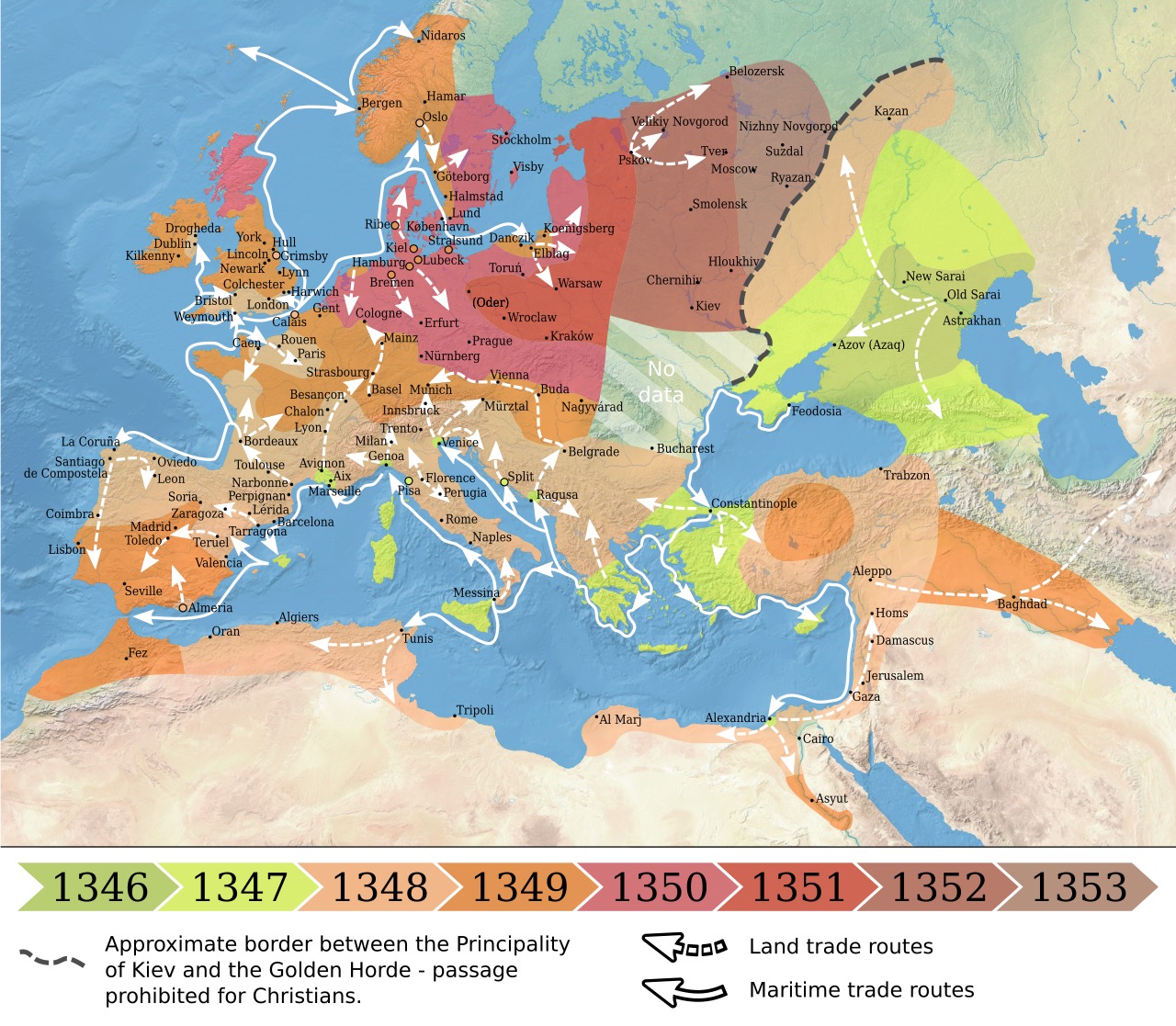
Between 1347 and 1353, somewhere around a third of Europe died. The survivors got a raise.
The Black Death arrived at Messina, Sicily, in October 1347 on Genoese trading ships from Crimea. The sailors were already dying. Within five years, the plague had crossed the entire continent. Conservative estimates put the mortality between 30 and 60 percent. Some regions lost two-thirds of their people. The death rate was so high and so fast that in many communities there were not enough survivors to bury the dead.
The economic effect was immediate, paradoxical, and in retrospect inevitable.
Before the plague, medieval Europe had a surplus of labor. The population had grown steadily through the 12th and 13th centuries, bringing more people into the workforce than the land and economy could efficiently absorb. Labor was cheap. Peasants and craftsmen had little bargaining power. Wages were low and rents were high, because there were always more people who needed to work than there were jobs to fill.
The Black Death reversed this overnight. With a third or more of the workforce dead, landowners suddenly needed workers they could not find. The survivors, suddenly scarce and sought-after, could demand better wages and conditions. Across England, France, and the Low Countries, wages for agricultural laborers rose sharply in the decades following the plague, in many cases doubling or tripling in real terms. Court records from England show that laborer wages rose roughly 50 percent above pre-plague levels by the 1360s, even as landlords attempted to hold wages down through legislation (the English Statute of Laborers of 1351 tried to freeze wages at pre-plague levels; it largely failed).
The nobility responded to the labor shortage and falling rents by political repression. The Peasants’ Revolt in England in 1381 and similar uprisings in France and Flanders were in part responses to elite attempts to recapture the labor advantages they had lost. The revolts were suppressed. But the underlying economic reality could not be suppressed: labor was more valuable than it had been, and that reality gradually restructured European society.
The connection to the Renaissance is real but indirect. The disruption of the plague weakened the institutional authority of the Church (which had failed conspicuously to stop or explain the catastrophe), broke up the rigid social structures that had constrained intellectual and commercial life, and forced reorganization of agricultural and trade economies in ways that gave more economic agency to merchants and skilled craftsmen. The wealthier survivors also inherited accumulated property, concentrating capital in fewer hands, some of which funded the arts.
The Italian city-states that became the centers of Renaissance art and learning, particularly Florence, were also the most deeply affected trading centers of the plague’s first waves. That is probably not coincidence. A civilization under mortal stress that survives reorganizes itself, and the reorganization created conditions for something different.
None of this was planned. The economic logic was simple and brutal: when the supply of something drops sharply, its price rises. In this case, the “something” was human lives, and the price was a wage.