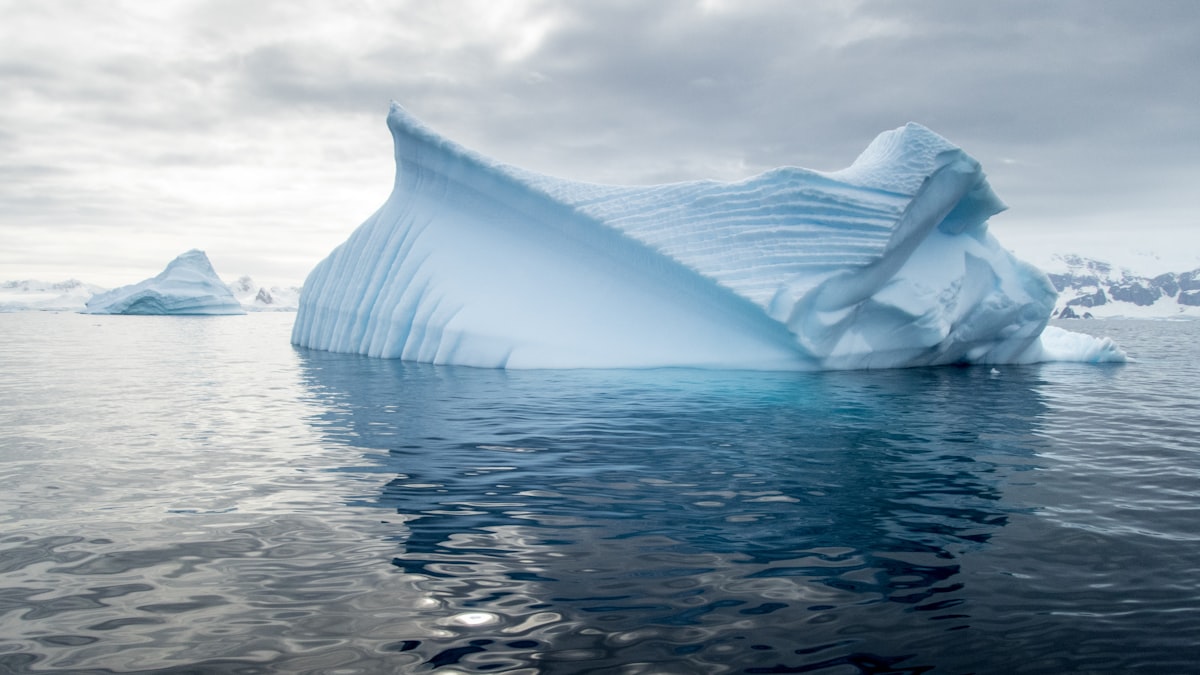
In a dry, frozen valley of East Antarctica, the Taylor Glacier appears to bleed. A slow, rust-red waterfall seeps out of the white ice and stains the snow below it. When the Australian geologist Griffith Taylor first saw it in 1911, he assumed red algae were producing the color.
He was wrong about the cause, but the truth turned out to be stranger.
Underneath the glacier sits a brine reservoir that has been sealed off from the outside world for roughly 1.5 million years. The water there is about three times saltier than the ocean, which is why it stays liquid below freezing. It is also rich in dissolved iron. When that ancient water finds a crack and emerges into the air, the iron meets oxygen for the first time and oxidizes on contact. The waterfall is, in the most literal sense, rusting in flight.
The more interesting thing is what is living in it. The trapped water carries a community of bacteria that have been cut off from sunlight, surface oxygen and fresh nutrients for that entire stretch. They survive by metabolizing sulfate with iron, a chemical trick that biochemists had described in theory but had not actually found in nature until they sampled the outflow in 2009.
Blood Falls is now treated as one of the closest analogs on Earth for what microbial life might look like beneath the ice of Europa or under the surface of Mars. A sealed, dark, salty reservoir, isolated longer than our species has existed, with something still alive inside it.
Learn more: Mikucki, J.A., et al., “A Contemporary Microbially Maintained Subglacial Ferrous ‘Ocean,’” Science, vol. 324, no. 5925, 2009, pp. 397-400. https://www.science.org/doi/10.1126/science.1167350