Flamingo chicks hatch gray. That fact alone should reframe how you think about the bird.
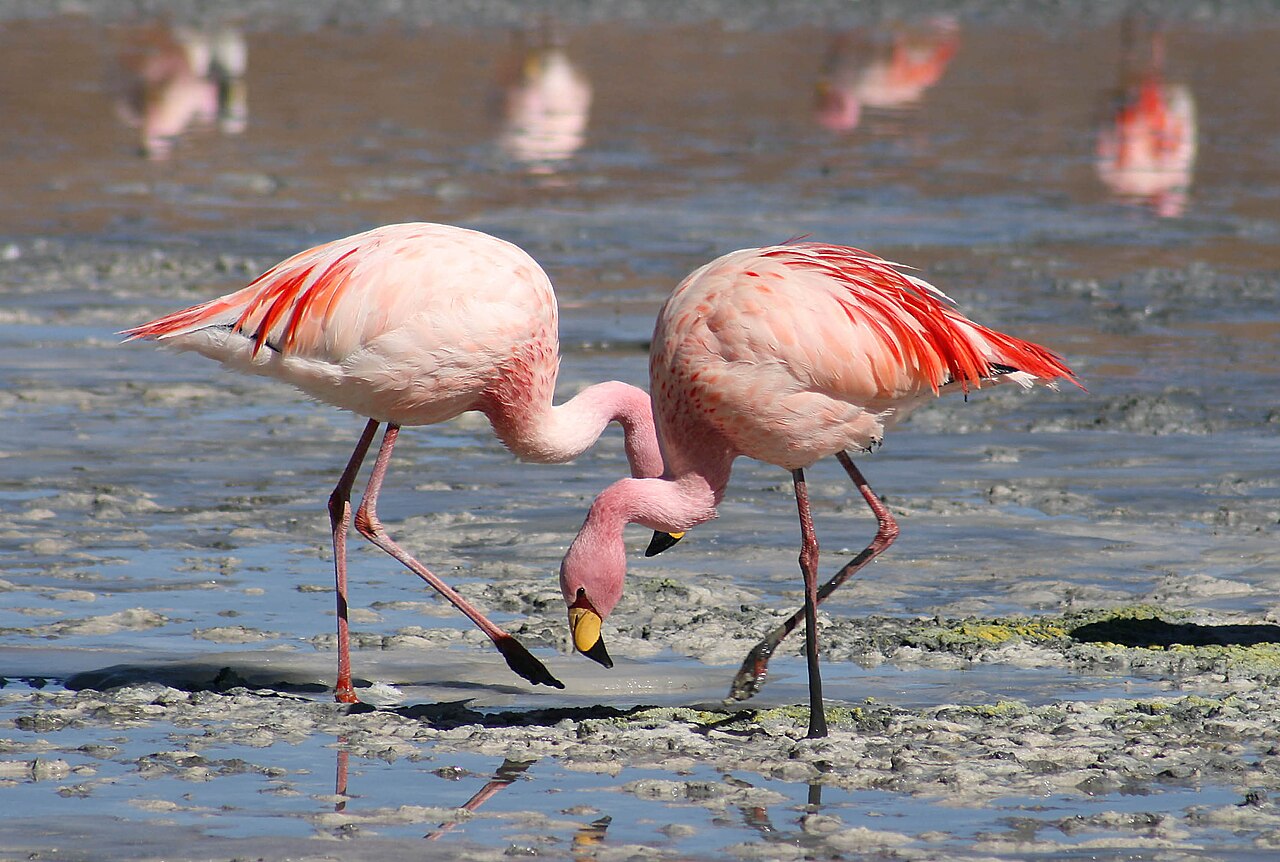
The pink comes entirely from diet. Flamingos eat algae, brine shrimp, and other small aquatic organisms that are rich in carotenoids: pigment molecules in the same chemical family as beta-carotene, the compound that makes carrots orange. Once ingested, those carotenoids are broken down by the liver, absorbed into the bloodstream, and deposited into the growing feathers. The more carotenoid-rich food a flamingo eats, the more intensely pink it becomes.
This is not incidental. The color is a reliable signal of health and fitness. Research on greater flamingos in the Camargue wetlands of southern France has found that brighter birds tend to be dominant, more reproductively successful, and better at securing nesting sites. The color works as a kind of visible resume. Pale flamingos, whatever the reason, are less attractive mates. Evolution has therefore reinforced the diet-color link at every level: birds that feed efficiently and convert carotenoids effectively into plumage are the ones that reproduce most.
This is also why early zoo flamingos turned ghostly white.
Before keepers understood the mechanism, captive flamingos were fed nutritionally complete diets that were, in carotenoid terms, completely wrong. The birds stayed healthy by most measures but slowly faded. When the pink feathers molted and new ones grew in, the new feathers had no pigment source to draw from. A flamingo that had been bright coral in the wild would arrive at a zoo and spend the next year becoming the color of typing paper.
The fix, once the mechanism was understood, was straightforward: supplement the diet with canthaxanthin or astaxanthin, synthetic or natural carotenoids that the birds can process and deposit into feathers just as they would from a diet of brine shrimp. Modern zoos now routinely add these to flamingo feed. The birds stay pink. The zoo visitors have no idea anything was ever wrong.
There is a deeper implication here. Flamingos are not pink organisms. They are white organisms that convert food into color on a running basis, continuously. If the food stops, the color stops. A molting flamingo that eats poorly will grow new feathers in a duller shade than the ones it shed. The bird is not a fixed thing but a process, and the pink is the visible output of that process working well.
The evolutionary reason is not fully settled, but the leading hypothesis involves honest signaling. Carotenoids are also powerful antioxidants. A bird that can afford to deposit them into feathers rather than use them for internal defense is, in effect, advertising its surplus. It has fed so well that it has carotenoids to spare. That advertisement, multiplied across a flock of thousands, turns salt flats and shallow lakes into the improbable pink spectacles that make flamingos famous.
The bird is remarkable. What makes it more remarkable is that the color is proof.