There is a science experiment in Australia that has been running, uninterrupted, since 1927. In nearly a century, it has produced exactly ten results. Nobody alive has ever watched one happen in real time.
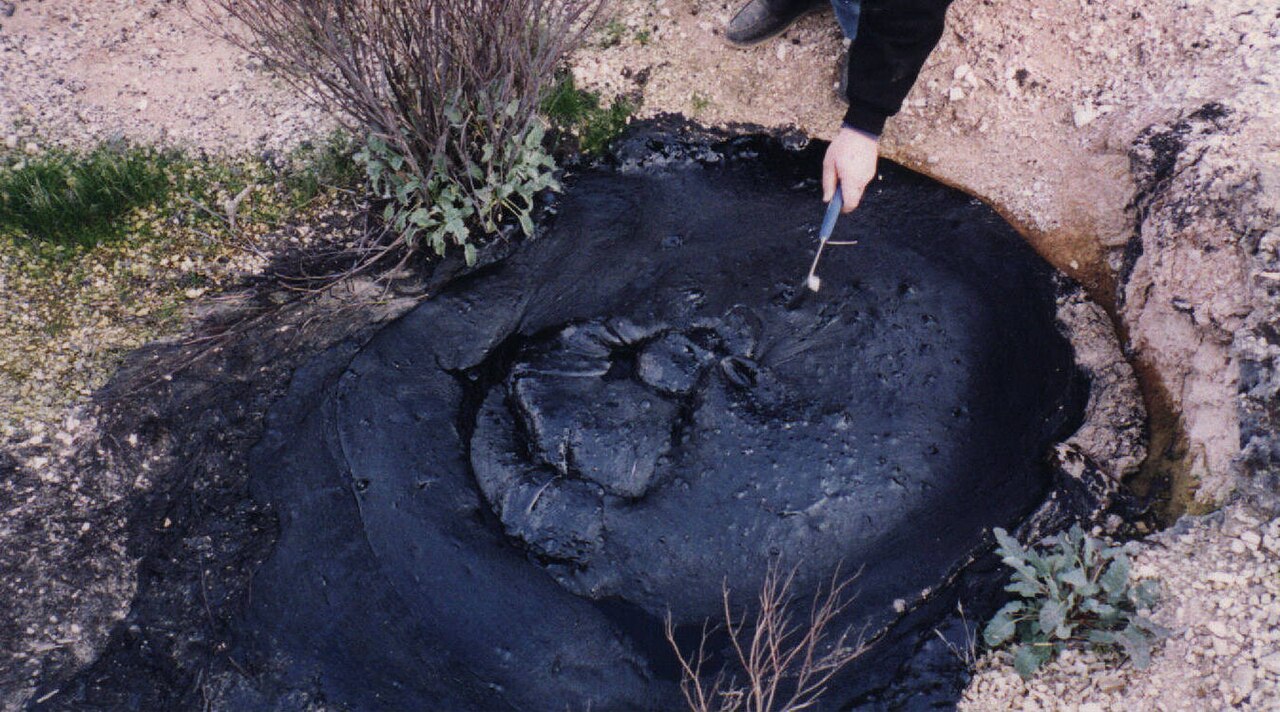
The experiment is a glass funnel of pitch, set up by Thomas Parnell, the first professor of physics at the University of Queensland. He heated a sample of pitch (a derivative of coal tar or petroleum that looks and feels like a solid), poured it into a sealed funnel, and let it settle for three years. Then he cut the seal. And waited.
Pitch at room temperature has a viscosity roughly 100 billion times greater than water. It behaves as a solid under ordinary circumstances: you can hit it with a hammer and it will shatter. But over years and decades, it flows. It is, technically, a liquid.
The first drop fell in 1938. The second in 1947. By 2025, ten drops had fallen. The average interval between drops is roughly eight to twelve years, though it varies with temperature: the laboratory has no air conditioning, so drops tend to fall in the warmer months when the pitch flows faster.
No one has ever seen a drop fall.
This is not for lack of trying. The experiment gained an Ig Nobel Prize in 2005, awarded to John Mainstone, who had been its custodian for decades. Mainstone spent years watching the funnel and missed every drop. Three times he left the room for just a few minutes and returned to find it had fallen. The one time a camera was set up to capture a drop, the equipment malfunctioned. In 2014, a webcam finally succeeded in recording the ninth drop live, but Mainstone had died in August 2013, months before the drop fell in April 2014. He never saw one.
What makes the experiment valuable, beyond its obvious entertainment as a study in patience, is what it demonstrates about the category of “solid.” We use the word to describe things that hold their shape. But shape-holding is a function of timescale. On human timescales, pitch is solid. On geological timescales, rocks flow. The mantle beneath Earth’s crust, made of silicate minerals we would call rock, convects over millions of years like a very slow, very hot fluid. The question of whether something is a solid or a liquid is partly a question of how long you are willing to wait.
Parnell made this point with a funnel and a lump of pitch. The point is still being made, drop by drop, in a glass case at the University of Queensland. You can watch it on a live webcam if you are patient.
You will probably not see anything.